
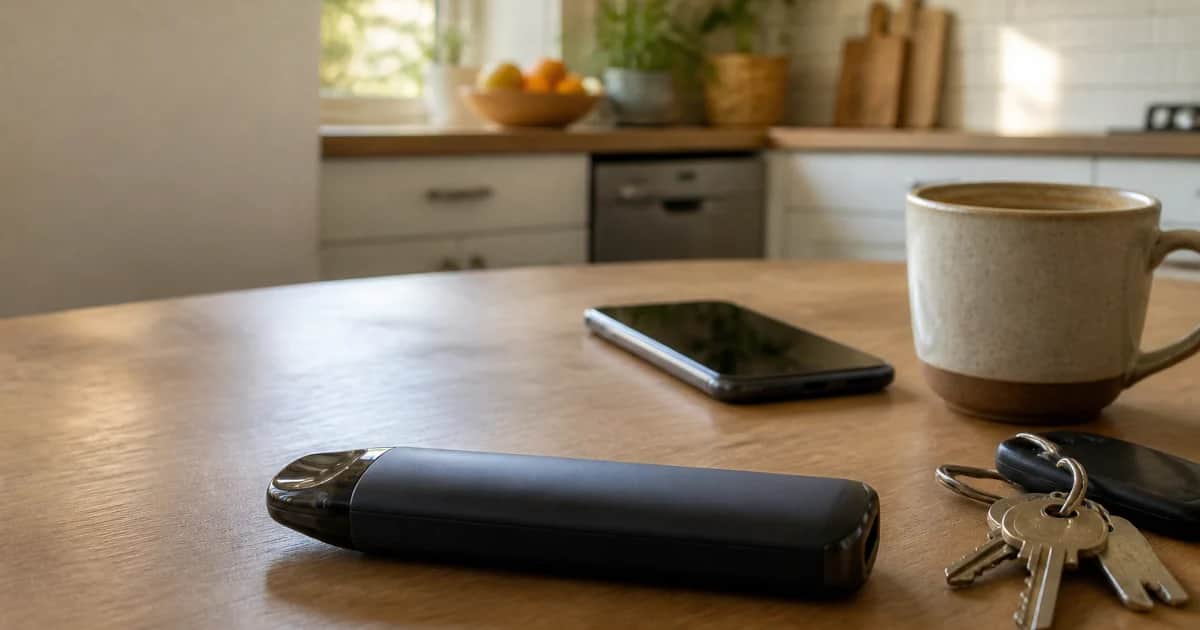
What is Quit Smoking?
Have you ever finished a cigarette and thought, "I did not even decide that"? Coffee, the car, a stressful call, the first drink, the step outside after a meal: the hand is already moving. You know the health facts. You have quit before. The pattern still wins.
If that cycle has been running for years, not days, you are dealing with a smoking habit, not a knowledge gap. People search this as quit smoking, stop smoking, or smoking cessation. It is the same clinical work: changing the automatic response to a cue, not reading another reason to stop.
This article explains what that habit is, how it differs from quit vaping and from a one-off slip, and how clinical hypnotherapy at Norwest Wellbeing may help. For treatment pathways and booking, see quit smoking treatment and the quit smoking hypnotherapy page.
A plain definition
Quit smoking, as a clinical presentation, is not a slogan. It is the work of ending a learned loop: a cue, an urge, a cigarette, brief relief, then a stronger cue next time.
The chemical side is real. Nicotine trains the brain to expect a hit at familiar moments. The habit side is often louder in clinic. The cigarette is wired to coffee, driving, stress, boredom, alcohol, and "I have earned this." Willpower talks to the part of you that already agrees. The loop is faster than that part.
Everyday "I should smoke less" has a reason and a plan. A smoking habit keeps restoring the old response after the plan is clear. People often say they smoke on autopilot, then feel foolish because they "know better."
Signs of an automatic smoking habit
The habit is not only nicotine. It is a body-and-cue pattern.
Behavioural signs commonly include:
- Reaching for a cigarette before a decision feels available
- Lighting up with coffee, in the car, after meals, or with a drink
- "Just one" that becomes the usual number
- Failed quit attempts that last days or weeks, then the old cue wins
- Smoking more when stressed, bored, or off-guard
- Hiding, rushing, or feeling embarrassed around family or colleagues
Body and mind signs may include:
- A restless pull at known times of day
- Irritability when a cigarette is delayed
- A belief that you cannot think, drive, or settle without one
- Relief that lasts minutes, then the next cue
- Shame that does not change the next automatic reach
Not everyone smokes a pack a day. Many people smoke "only in the evenings" or "only when I drink" and still cannot stand the habit down when they decide to stop.
Smoking habit vs a slip vs related presentations
These get collapsed into one story. They are not the same.
A hard week or a slip
A slip is a cigarette after a clear quit. It is common. It is not proof that you cannot stop. It is a cue that still has a path.
An automatic smoking habit
The cue-to-cigarette loop is the default. Plans reset. The hand moves first. This is the pattern this article and the quit smoking money page treat.
Quit vaping
Vaping can be a nicotine habit with different cues: the device is always in reach, there is no natural end point like finishing a cigarette, and puffing weaves into work, driving, and screens. That work belongs on the quit vaping page. Do not treat this article as a vaping explainer.
Alcohol or other habits
Drinking and smoking often travel together. If the main problem is alcohol, start with alcohol reduction. If both are active, say so in session. Do not fold one into the other on the page.
What keeps smoking going
Smoking is not a character flaw. It is a trained response that has become too good at its job.
Common maintaining factors include:
- Cues that fire without a decision: coffee, keys, stress, the first drink
- Brief relief that teaches the brain the cigarette is the solution
- Identity as "a smoker" that makes a quit feel like losing yourself
- Fear of weight change, mood, or "I will not cope at work"
- Other people smoking nearby, which restarts the cue
You can understand all of this and still light up. That is why information-only approaches often fail. The pattern is faster than the part of you that "knows it is time."
Daily impact
Left to run, the habit tends to shrink a life in small increments:
- Breaks organised around cigarettes, not rest
- Money spent without feeling you chose it
- Breath, fitness, and sleep that do not match the effort you put in
- Tension with partners, children, or colleagues
- A quiet belief that you are weaker than people who just stopped
People often wait because they still work and look "fine." Functioning is not the same as being free of the cue.
When to seek help in Australia
Seek support if you have tried to stop and the old cue keeps winning, if health, money, or family pressure is rising, or if you smoke to manage stress and have no other off-switch.
Start with your GP if you want medical advice, nicotine replacement, or a check on cough, blood pressure, or other symptoms. Quitline is 13 7848 (13 QUIT). If you are in danger or thinking about suicide, call 000. Beyond Blue (1300 22 4636) and Lifeline (13 11 14) are 24-hour services.
Clinical hypnotherapy is one option alongside GP care and Quitline. It is not a replacement for emergency care or for medical treatment of smoking-related illness.
If you want a structured self-check first, use the educational quit smoking test. It is screening only. It is not a diagnosis.
How clinical hypnotherapy may help
At Norwest Wellbeing, quit-smoking work is framed as changing the automatic cue, not scaring you with more health facts.
In trance, sessions can help you:
- Map the moments the hand moves first
- Reduce the pull of coffee, car, stress, and drink cues
- Rehearse being a non-smoker in the same situations, not only in a quiet room
- Separate "I need a break" from "I need a cigarette"
Results vary. Typical reported improvement sits in an 80-85% range for many people within 1-3 sessions. Some need more when the habit is long, when alcohol is in the loop, or when stress load stays high.
Sessions run in clinic at Norwest (Sydney Hills) and via Zoom Australia-wide. Paul or Rebecca Smith lead clinical hypnotherapy. A personalised audio session is also available if you want between-session support: hypnosis for quit smoking. That download is not a live appointment.
Learn about quit smoking hypnotherapy and book →
Frequently Asked Questions
Is quit smoking the same as smoking cessation?
Yes. People search quit smoking, stop smoking, and smoking cessation for the same work: ending the automatic cigarette loop. This article uses quit smoking because that is the page name.
Do I have to stop before the first session?
No. Many people still smoke when they book. The session works with the habit you have now. Do not delay because you have not already quit.
Is this page for vaping?
No. Use the quit vaping page if the device is the main habit.
How is hypnotherapy different from patches or gum?
Nicotine replacement addresses the chemical side. Hypnotherapy works with the cue-to-cigarette loop that patches do not map. Some people use both. That is a conversation with your GP and your practitioner.
Do I need to come to Sydney?
No. Zoom sessions are available Australia-wide, in the same clinical framework as in-clinic appointments.
Conclusion
A smoking habit is a real, common, and changeable pattern. If the cigarette still wins after you have decided to stop, you do not have to keep fighting it with more willpower alone.
At Norwest Wellbeing, Paul or Rebecca Smith work with clients in person at Norwest, in Sydney's Hills district, and with clients across Australia via Zoom.
Find out more about quit smoking support at Norwest Wellbeing →

Written by
Abi McIntyreMedical author and researcher with over 10 years of experience, specialising in mental health.

Clinically approved by
Paul SmithDip.Clin.Hyp. Dip.Psych.Th.
Ready for tailored support?
Book a complimentary consultation with the Norwest Wellbeing team.
We'll talk through your goals, match you with the right practitioner, and outline the first steps to lasting change.
More resources to explore
View all articles →
PTSD Hypnotherapy vs. Traditional Approaches: Which Is Better?
EMDR and trauma-focused CBT are the first-line, evidence-based PTSD treatments, usually with a clinical psychologist; medication may also help via a psychiatrist. Hypnotherapy is a complementary...
How to Prepare for Your First PTSD-Support Hypnotherapy Session
Confirm you have a PTSD diagnosis or assessment, and ideally are already engaged with a psychologist or psychiatrist for trauma-focused treatment, before treating hypnotherapy as a complementary...

Myths About Hypnotherapy for PTSD: Debunking Common Misconceptions
The biggest myths about hypnotherapy for PTSD are that it can cure trauma alone, that it requires reliving traumatic events, and that it can replace EMDR or medication. In reality it's a...