
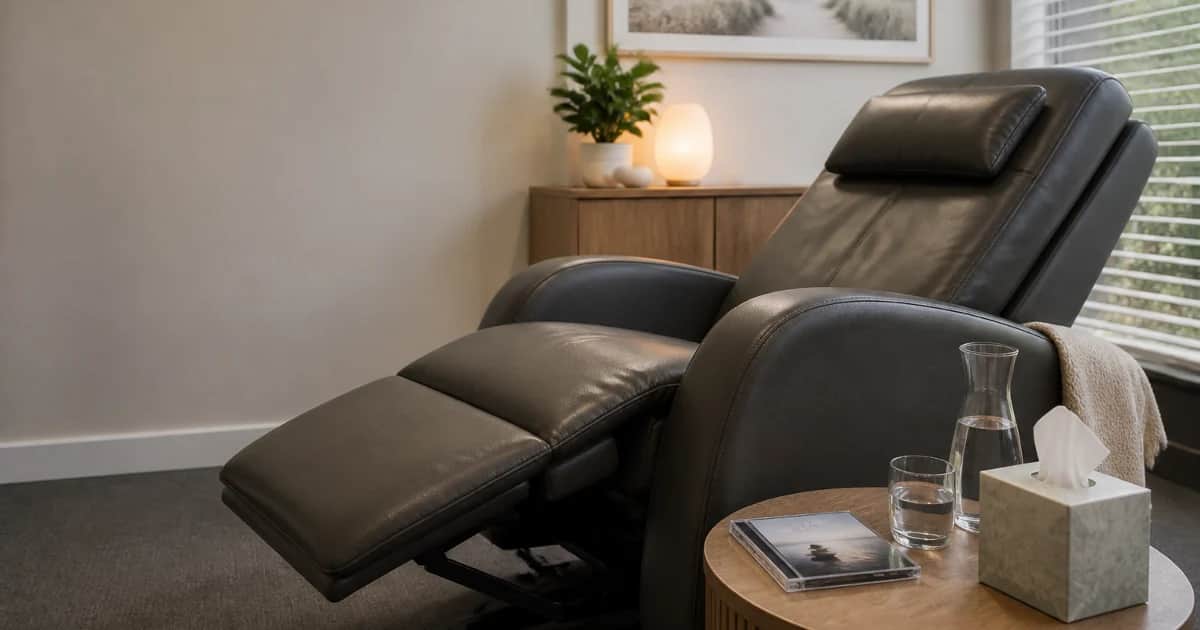
How to Prepare for Your First PTSD-Support Hypnotherapy Session
Last updated 20 August 2026. Reviewed by Paul Smith and Rebecca Smith, clinical hypnotherapists at Norwest Wellbeing.
If you are in crisis or having thoughts of harming yourself, call Lifeline on 13 11 14, or 000 in an emergency.
Quick answer: Confirm you have a PTSD diagnosis or assessment, and ideally are already engaged with a psychologist or psychiatrist for trauma-focused treatment, before this session. You will not be asked to describe your trauma in detail. Results vary considerably.
Step 1: Get a diagnostic assessment first if you haven't already
If you haven't had PTSD formally assessed, see your GP first for referral to a psychologist or psychiatrist with trauma training. This is the appropriate first step, both for accurate diagnosis and for access to evidence-based trauma-focused treatment like EMDR or trauma-focused CBT.
Step 2: Note any current treatment
If you're already seeing a psychologist or psychiatrist, have this clear in your mind before your session so your hypnotherapist can understand the full picture and ensure the session complements, rather than duplicates or conflicts with, your existing care plan.
Step 3: Get clear on your specific goal for this session
Better sleep, reduced general hyperarousal, more capacity to feel calm day-to-day, these are realistic, narrower goals hypnotherapy's regulation-focused approach is suited to support, rather than processing the trauma itself.
Step 4: Know that you will not be asked to describe your trauma in detail
A trauma-informed practitioner does not require, and will not push for, detailed trauma recall during intake or sessions. If at any point a question feels like too much, you can say so and the conversation will redirect.
Step 5: Consider whether you're in a stable enough place for this to be helpful right now
If you're currently in crisis, experiencing suicidal thoughts, or in an acutely unstable period, prioritise urgent psychological or psychiatric support first (see the crisis line above). Hypnotherapy sessions are better suited to a more stable point in your treatment journey.
Quick checklist before you book
- Diagnostic assessment from a GP, psychologist, or psychiatrist completed, if not already
- Current psychological or psychiatric treatment noted clearly
- A specific, realistic goal for the session (sleep, calm, hyperarousal) identified
- Understanding that detailed trauma recall will not be required
- Confirmation that you are in a stable enough place for this session to be useful right now
- Understanding that this complements, rather than replaces, trauma-focused psychological care
What to expect on the day
There is no need to do anything unusual before your session. The intake conversation will be unhurried and will not press for trauma detail. The session generally runs under an hour and focuses on relaxation and regulation. Sessions are available in clinic at Norwest Wellbeing in Baulkham Hills or via Zoom Australia-wide.
What happens immediately after
Most people feel calmer rather than dramatically transformed straight after the session. If you're also seeing a psychologist or psychiatrist, mention any noticeable change in sleep or general calm at your next appointment with them too, to keep everyone informed.
Between sessions
Notice whether sleep or your general sense of hyperarousal feels any different, and mention this at your next session so your practitioner can adjust the focus of any follow-up work.
Common questions
Do I need a formal PTSD diagnosis before booking hypnotherapy? It's strongly recommended, particularly to ensure you're connected with appropriate trauma-focused psychological care first.
Will I be pushed to talk about what happened to me? No, a trauma-informed practitioner will not require this, and sessions focus on regulation rather than detailed recall.
Can I do hypnotherapy instead of seeing a psychologist? For PTSD, trauma-focused psychological therapy with a specifically trained psychologist is the recommended core treatment. Hypnotherapy is a complementary addition only.
What if I start to feel distressed during a session? Tell your practitioner immediately. Sessions can be paused or stopped at any point, and your comfort and safety come first.
Next step
If you're already engaged with appropriate trauma-focused psychological care, book a session with Paul or Rebecca Smith, in clinic at Baulkham Hills or via Zoom Australia-wide.
This information does not replace medical or psychological advice. If you are in crisis, call Lifeline on 13 11 14 or 000 in an emergency.

Written by
Abi McIntyreMedical author and researcher with over 10 years of experience, specialising in mental health.

Clinically approved by
Paul SmithDip.Clin.Hyp. Dip.Psych.Th.
Ready for tailored support?
Book a complimentary consultation with the Norwest Wellbeing team.
We'll talk through your goals, match you with the right practitioner, and outline the first steps to lasting change.
More resources to explore
View all articles →
PTSD Hypnotherapy vs. Traditional Approaches: Which Is Better?
EMDR and trauma-focused CBT are the first-line, evidence-based PTSD treatments, usually with a clinical psychologist; medication may also help via a psychiatrist. Hypnotherapy is a complementary...

Myths About Hypnotherapy for PTSD: Debunking Common Misconceptions
The biggest myths about hypnotherapy for PTSD are that it can cure trauma alone, that it requires reliving traumatic events, and that it can replace EMDR or medication. In reality it's a...

R U OK? Day 2026: How to Ask, Listen and Check In
R U OK? Day 2026 is Thursday 10 September. Use the official Ask, Listen, Encourage action and Check in steps, and call Lifeline on 13 11 14 if you or someone else is in crisis.