
Anxiety Treatment in Australia
If you have been searching for anxiety treatment, you are usually looking for more than another list of breathing apps. Persistent worry has a cycle: a cue, a surge of "what if," checking or avoidance, brief relief, then a louder alarm next time. Willpower and generic relaxation often fail because they talk to the part of you that already knows the fear is oversized.
This guide is practical and commercial. It covers what treatment needs to change, how clinical hypnotherapy approaches anxiety, what a course looks like at Norwest Wellbeing, and when to book.
For the condition explainer, start with What is anxiety?. For a screening framework, see the anxiety test. The live booking page is anxiety hypnotherapy.
This article is a treatment guide. It is not the appointment page.
What effective treatment needs to target
Useful anxiety treatment rarely works by lecturing the conscious mind alone. The cycle typically includes:
- A cue - uncertainty, a body sensation, a news item, a quiet evening, a child's cough
- An interpretation - "this means something is wrong"
- Arousal - tight chest, busy mind, urge to fix it now
- A safety behaviour - checking, Googling, rehearsing, cancelling, seeking reassurance
- Short-term relief, then a longer-term cost - the brain learns you cannot sit with uncertainty
Treatment that only soothes the cost (exhaustion, shame) without changing the cue-to-checking path tends to cycle. Approaches that interrupt the automatic loop and rebuild tolerance for "not knowing yet" tend to hold.
Common treatment approaches (brief map)
People in Australia may encounter several pathways:
- GP care - assessment, blood tests where relevant, medication advice, Mental Health Treatment Plan
- Psychology / CBT - thought records, behavioural experiments, reducing safety behaviours
- Medication - sometimes useful via a GP or psychiatrist, especially when sleep or mood has collapsed
- Clinical hypnotherapy - works with subconscious automaticity, body alarm, and the urge to check
These are not mutually exclusive. Many clients combine approaches. The right fit depends on history, other conditions, and preference.
If your anxiety is mainly social, health-focused, or a specific phobia, use those condition pages rather than this general treatment guide.
How clinical hypnotherapy helps with anxiety
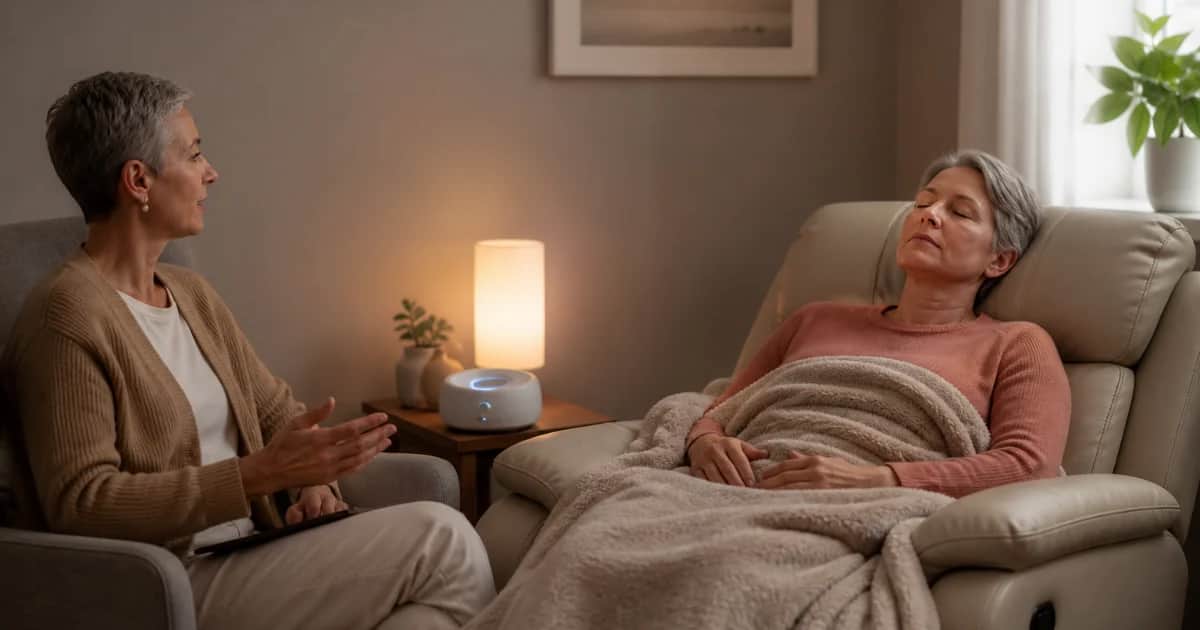
At Norwest Wellbeing, anxiety work is specialist nervous-system therapy, not a generic "relax and visualise a beach" session.
Assessment of the loop
Sessions map what starts the worry, which checking habits keep it fed, and whether the pattern is mostly generalised, panic-led, or mixed.
Hypnotic interruption of the alarm
In trance, the therapist works with the learned pathway from cue to catastrophe, building earlier awareness and installing calmer responses that fit real life (a meeting, a night feed, an inbox), not a ritual you will never use.
Body-first settling
Where anxiety lives in the chest, gut, or jaw, those sensations are treated as part of the pattern, not as proof that the fear is correct.
Between-session reinforcement
Self-hypnosis and practical tools help new patterns stick. A personalised audio session is available: hypnosis for anxiety. That page is a $97 download, not a live appointment. Live sessions are booked from the condition page.
Results vary. Many clients report meaningful reduction in worry intensity and checking within roughly 2-5 sessions. Some need a longer course when anxiety has been present for many years or when stress load stays high.
Explore anxiety hypnotherapy (book / learn more) →
What a course at Norwest Wellbeing looks like
- Conversation and fit - clarify goals, history, and whether hypnotherapy is appropriate
- Initial sessions - map the cycle, begin interruption work, set between-session practice
- Review - adjust based on what is changing (sleep, checking, presence, confidence)
- Consolidation - reinforce gains and plan for high-risk periods (exams, deadlines, illness in the family, travel)
Sessions are available in clinic at Norwest (Sydney Hills) and via Zoom Australia-wide. Paul or Rebecca Smith lead clinical hypnotherapy for this presentation.
Typical fees are published on the condition page. Initial and returning sessions are live clinical appointments, not the audio product.
Who this treatment suits
Hypnotherapy for anxiety is often a strong fit if you:
- Have tried to "logic" your way out and the loop still wins
- Check, rehearse, or Google more than you want to admit
- Feel tired from being on alert, even when life looks fine from the outside
- Want a specialist who treats anxiety as the main problem, not a side note
It may not be the only support you need if there is acute crisis, unmanaged substance dependence, or complex psychiatric needs that require a different primary pathway. We will say so clearly if that is the case.
Anxiety treatment vs self-help alone
Breathing clips, journals, and magnesium can help some people some of the time. They often fail when the alarm is automatic, or when checking has become the only way the nervous system trusts the day. Self-help is still useful as support between clinical sessions. It is not a verdict that you should have fixed this already.
If you are unsure whether your pattern matches clinical anxiety, use the educational screening article:
Frequently Asked Questions
Is there an anxiety specialist in Australia who uses hypnotherapy?
Specialist awareness varies. Norwest Wellbeing treats anxiety as a core presentation with clinical hypnotherapy for adults, and related pages for social, health, and child anxiety. Zoom access means you do not need to live in Sydney.
How is this different from CBT for anxiety?
CBT focuses heavily on conscious thoughts and behavioural experiments. Hypnotherapy also builds awareness, and works more directly with automatic body-and-mind patterning inside a trance-based framework. Some people use both.
Will I need medication?
Not necessarily. That is a GP or psychiatrist decision. Hypnotherapy can sit alongside medication. Do not stop prescribed medicine because of this article.
How many sessions will I need?
Many people notice change in 2-5 sessions. History, other conditions, and current load change that number. You will get a realistic view after the first conversation.
Is online treatment effective for anxiety?
For many clients, yes. Online sessions remove travel stress and let you practise in the same environment where the worry actually happens.
Next step
If anxiety is costing you sleep, patience, or presence, treatment is available without needing to fail at more willpower first.
Book or learn more about anxiety hypnotherapy at Norwest Wellbeing →

Written by
Abi McIntyreMedical author and researcher with over 10 years of experience, specialising in mental health.

Clinically approved by
Paul SmithDip.Clin.Hyp. Dip.Psych.Th.
Ready for tailored support?
Book a complimentary consultation with the Norwest Wellbeing team.
We'll talk through your goals, match you with the right practitioner, and outline the first steps to lasting change.
More resources to explore
View all articles →
Myths About Hypnotherapy for Misophonia: Debunking Common Misconceptions
The biggest myths about misophonia and hypnotherapy are that misophonia is just being fussy about noise, that it's the same as hyperacusis, and that one session guarantees a permanent cure. In...

Insomnia Hypnotherapy vs. Traditional Approaches: Which Is Better?
CBT-I, sleep medication, and sleep hygiene changes are the main traditional insomnia approaches; hypnotherapy targets the anxiety and hyperarousal directly. They are often combined. Most clients...

How to Prepare for Your First Insomnia Hypnotherapy Session
Track your sleep pattern for a week or two, note whether the trouble is falling asleep, staying asleep, or waking too early, and rule out sleep apnoea with your GP if you snore heavily or feel...