
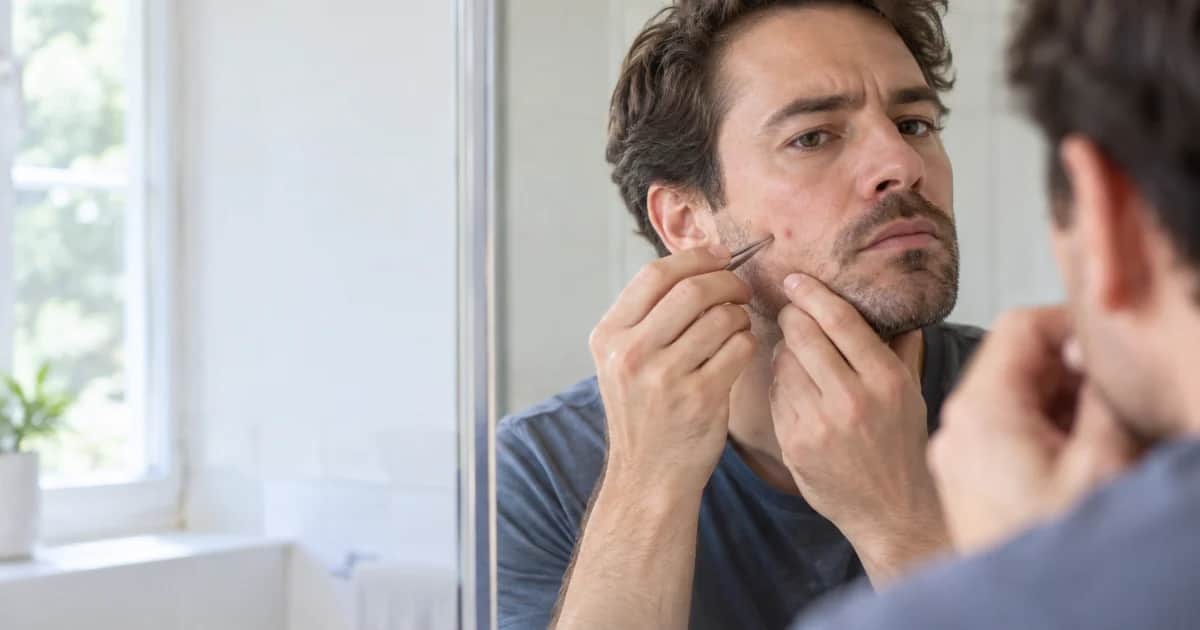
What is Skin Picking?
You notice, later, that a spot you meant to leave has become a sore. Or you are already at the mirror, or already using a tool, before a decision feels available.
If that loop has been running for months, not one bad week, you are dealing with skin picking. The clinical names are dermatillomania and excoriation (skin-picking) disorder. People also search compulsive skin picking, picking at skin, or BFRB. The work on this page is habit-level support: changing an automatic pick, not a lecture about willpower.
This article explains what that habit is, how it differs from hair pulling and nail biting, and how clinical hypnotherapy at Norwest Wellbeing may help. For treatment pathways and booking, see skin picking treatment and the skin picking hypnotherapy page.
A plain definition
Skin picking is repeated picking, squeezing, or scratching of the skin, often without a clear decision to start. Common cues include stress, boredom, concentration, and noticing a bump, scab, or "imperfection."
The pick can do a short job: settle a feeling, or "fix" something you can see. Then shame arrives, and the next cue is easier to follow.
This is not a moral failure. It is a learned loop: cue, hand, pick, brief relief, stronger cue next time. Willpower talks to the part of you that already agrees. The loop is often faster than that part.
Signs of a skin-picking habit
Behavioural signs commonly include:
- Picking during screens, focus, or waiting, often without noticing
- Time spent checking the skin in mirrors
- Using tools (tweezers, pins) and hiding them
- Avoiding swimming, short sleeves, or close lighting
Physical signs commonly include:
- Sores, scabs, and marks in different stages of healing
- Infection or scarring in picked areas
- Common sites include the face, arms, hands, and shoulders, though any reachable area can be involved
If the main behaviour is pulling hair, use the trichotillomania page. If the main behaviour is biting nails, use nail biting.
How this differs from hair pulling, nail biting, and OCD
These are related body-focused repetitive behaviours. They are not the same money page.
Hair pulling targets hair. Nail biting targets nails. Skin picking targets skin. If more than one is present, say so at booking.
Skin picking sits in the same clinical family as some obsessive-compulsive related conditions. If the main picture is obsessions and rituals rather than a picking habit, use the OCD page. This page does not replace ERP or medical care.
Australian context
Skin picking is commonly reported. There is no verified official Australian statistic that 2-5% of the population has dermatillomania, despite how often a precise percentage is repeated online. What matters clinically is your pattern.
Stress, boredom, anxiety, and noticing a mark are commonly named cues. There is no verified trigger-percentage split from Beyond Blue or the APS that we can cite on this page.
When to seek help in Australia
Seek support when the habit has lasted months, when rules keep failing, or when sores, scarring, or hiding skin are costing you.
See a GP or dermatologist first if there is infection, spreading wounds, or a skin condition that needs medical treatment. Norwest Wellbeing is not a crisis service. Lifeline is 13 11 14. In an emergency call 000.
If the pattern is habit-level, clinical hypnotherapy for skin picking is one option. You can also take a short skin picking screening quiz or read the self-screening guide.
How clinical hypnotherapy may help
Sessions with Paul or Rebecca Smith start with a map of your cues, then guided relaxation and suggestion aimed at those situations. You stay aware throughout.
Norwest Wellbeing's own reported outcomes sit in a 75-85% range for many people within 2-5 sessions. That figure is clinic-reported, not a finding from a large skin-picking trial. Research specifically on hypnosis for skin picking is limited. A 2017 systematic review noted that hypnosis has been proposed for excoriation, but that no randomised trials of hypnosis for this condition had been undertaken. Results vary.
A personalised hypnosis audio is also available at /hypnosis/skin-picking if you want something to use between live sessions.
Frequently asked questions
Is skin picking a serious mental health condition? Severe, persistent picking that causes lesions and distress can meet criteria for excoriation disorder. This page is habit-level support, not a diagnosis. A GP or psychologist can assess if needed.
Does research prove hypnotherapy works for skin picking? The honest answer is that skin-picking-specific hypnosis trials are lacking. Habit reversal has stronger trial evidence. Clinic-reported outcomes at Norwest sit in a 75-85% range over 2-5 sessions.
Next step
If this description matches what you have been living with, start on the skin picking hypnotherapy page, or book with Paul or Rebecca Smith at the Baulkham Hills clinic or via Zoom Australia-wide.

Written by
Abi McIntyreMedical author and researcher with over 10 years of experience, specialising in mental health.

Clinically approved by
Paul SmithDip.Clin.Hyp. Dip.Psych.Th.
Ready for tailored support?
Book a complimentary consultation with the Norwest Wellbeing team.
We'll talk through your goals, match you with the right practitioner, and outline the first steps to lasting change.
More resources to explore
View all articles →
Myths About Hypnotherapy for Misophonia: Debunking Common Misconceptions
The biggest myths about misophonia and hypnotherapy are that misophonia is just being fussy about noise, that it's the same as hyperacusis, and that one session guarantees a permanent cure. In...

Insomnia Hypnotherapy vs. Traditional Approaches: Which Is Better?
CBT-I, sleep medication, and sleep hygiene changes are the main traditional insomnia approaches; hypnotherapy targets the anxiety and hyperarousal directly. They are often combined. Most clients...

How to Prepare for Your First Insomnia Hypnotherapy Session
Track your sleep pattern for a week or two, note whether the trouble is falling asleep, staying asleep, or waking too early, and rule out sleep apnoea with your GP if you snore heavily or feel...