
OCD Treatment: What Actually Helps
If you have reached the point of searching for OCD treatment, you have probably already tried the obvious things: "just ignore the thought," one more check "to be sure," asking someone to reassure you. When those have not been enough, it helps to understand what treatment actually targets.
This guide walks through the main options available in Australia, where clinical hypnotherapy fits alongside first-line care, and what a course with Paul or Rebecca Smith at Norwest Wellbeing typically involves.
What treatment actually targets
Effective work is not only about feeling calmer in the chair. The pattern usually includes:
- An intrusive thought, image, or "not right" feeling
- A ritual (check, wash, count, mental replay) used to settle it
- Short relief, then a stronger cue next time
- Avoidance of people, places, or tasks that start the loop
If the main picture is general worry without rituals, use the anxiety page. If the main behaviour is picking skin, use skin picking.
Map of approaches in Australia
These are not mutually exclusive.
GP and, when needed, a psychologist or psychiatrist. First stop for assessment, risk, and whether medication is part of the plan. Do not stop prescribed medication because of this page.
Exposure and response prevention (ERP). The best-studied psychological treatment. You practise facing the cue without the ritual. It is hard work. It is still first-line for a reason.
Medication. Often an SSRI, decided with a doctor. Hypnotherapy is not a substitute.
Clinical hypnotherapy. Complementary support aimed at the automatic pull toward the ritual. See the OCD hypnotherapy page.
How hypnotherapy helps (and what it does not do)
A session with Paul or Rebecca Smith starts with a non-judgemental conversation about your actual thoughts and rituals, then guided relaxation and suggestion aimed at those cues. You stay aware throughout.
The practical aim is a quieter automatic pull, so that sitting with uncertainty is more available. It is not a claim that hypnosis rewires OCD circuits on a scan. It is not a promise that intrusive thoughts will disappear. It is not a standalone replacement for ERP.
Cinaroglu and colleagues (2026) compared 12 weekly online CBT sessions with 12 weekly Ericksonian hypnotherapy sessions and a wait-list in 99 adults with OCD. Both active treatments reduced symptoms compared with wait-list. That protocol is 12 sessions. It is not the 2-5 session course used at this clinic, and it does not make hypnosis first-line care.
Norwest Wellbeing's own reported outcomes sit in a 75-85% range for many people within 2-5 sessions. That figure is clinic-reported, not a research finding. Results vary.
What a course at Norwest involves
Paul or Rebecca Smith. Clinic at Baulkham Hills, or Zoom Australia-wide.
- Assessment. Thoughts, rituals, what you have already tried, and whether anxiety, panic, or a BFRB is the better page. If you are already in ERP or on medication, say so.
- Sessions. Most people need 2-5. Later sessions review real cues and adjust the work.
- Between sessions. Notice the cue. Practise not adding the extra ritual. A personalised audio is available at /hypnosis/obsessive-compulsive-disorder-ocd.
Who it suits
It suits adults whose loop is thought-plus-ritual, who want complementary support, and who understand this is not a replacement for ERP or medical care.
It does not suit someone who needs crisis care, or whose main job is skin picking, hair pulling, or general anxiety without rituals.
Frequently asked questions
How many sessions will I need? Most people need 2-5. You will get a realistic view after the first conversation.
Can I do this on Zoom? Yes. The clinical process is the same. Book in clinic if home is not private.
Will I stop having intrusive thoughts? No honest clinic promises that. The useful change is a quieter pull to ritualise them.
Next step
Read what OCD is, try the screening quiz, or book from the OCD hypnotherapy page.

Written by
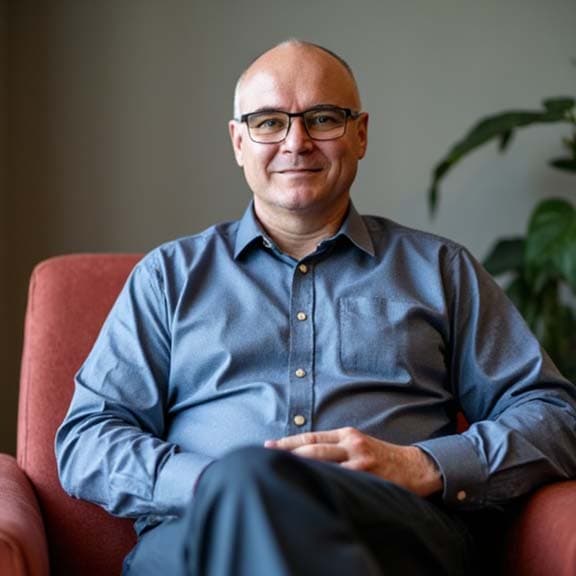
Abi McIntyreMedical author and researcher with over 10 years of experience, specialising in mental health.
Clinically approved by
Paul SmithDip.Clin.Hyp. Dip.Psych.Th.
Ready for tailored support?
Book a complimentary consultation with the Norwest Wellbeing team.
We'll talk through your goals, match you with the right practitioner, and outline the first steps to lasting change.
More resources to explore
View all articles →
PTSD Hypnotherapy vs. Traditional Approaches: Which Is Better?
EMDR and trauma-focused CBT are the first-line, evidence-based PTSD treatments, usually with a clinical psychologist; medication may also help via a psychiatrist. Hypnotherapy is a complementary...
How to Prepare for Your First PTSD-Support Hypnotherapy Session
Confirm you have a PTSD diagnosis or assessment, and ideally are already engaged with a psychologist or psychiatrist for trauma-focused treatment, before treating hypnotherapy as a complementary...

Myths About Hypnotherapy for PTSD: Debunking Common Misconceptions
The biggest myths about hypnotherapy for PTSD are that it can cure trauma alone, that it requires reliving traumatic events, and that it can replace EMDR or medication. In reality it's a...